Retaining Wall Design & Installation
Transform sloped yards into beautiful, functional outdoor spaces with professionally designed and built retaining walls.
Why Ann Arbor Properties Need Retaining Walls
Retaining walls do more than hold back soil. They solve real problems that many Ann Arbor homeowners face. Sloped yards limit how you can use your outdoor space. Erosion washes away topsoil and damages landscaping. Water runoff pools near foundations and causes basement flooding. A well-designed retaining wall addresses all these issues while adding beauty and value to your property.
Think about what a retaining wall creates for you. It transforms unusable hillsides into level terraces perfect for patios, gardens, or play areas. It stops erosion by holding soil in place during heavy rains. It directs water away from your foundation, protecting your home from moisture damage. And it defines outdoor spaces with clean lines and attractive materials that complement your home's architecture.
Not every slope needs a retaining wall, but if you struggle with erosion, limited yard space, or drainage problems, a retaining wall might be the solution. Professional masonry contractors can assess your property and recommend the right approach. We look at soil conditions, slope angles, drainage patterns, and local building codes to design walls that last.
Choosing the Right Retaining Wall Materials
The material you choose affects how your retaining wall looks, performs, and lasts. Here are the most popular options we install:
- Natural Stone: Fieldstone, limestone, and granite create stunning, organic-looking walls that blend with natural landscapes. Natural stone is durable, unique, and increases property value. It works especially well for shorter walls and curved designs.
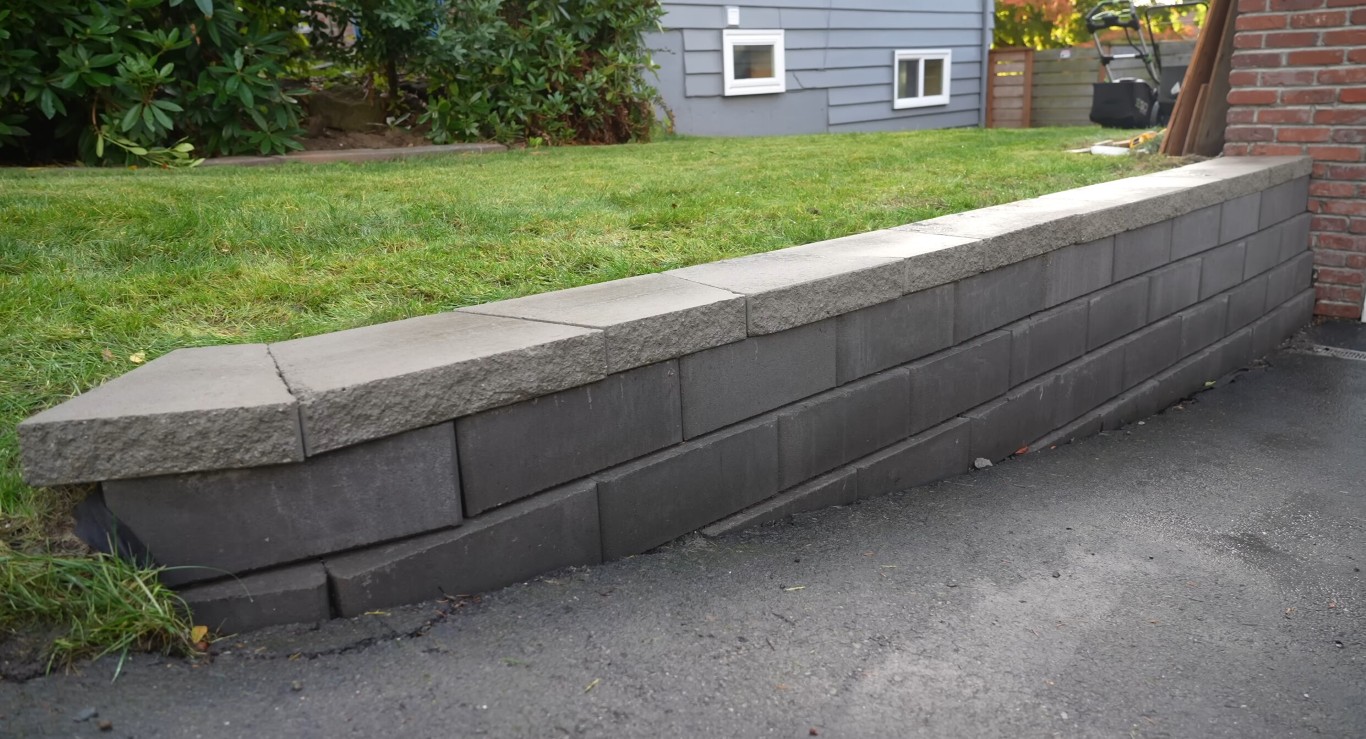
- Concrete Block (Segmental): Modern concrete blocks come in dozens of colors, textures, and sizes. They install faster than natural stone, cost less, and work well for tall walls. Many styles mimic the look of natural stone at a fraction of the cost.
- Brick: Traditional brick retaining walls offer timeless beauty and match historic homes perfectly. Brick works best for lower walls (under four feet) and requires expert brick installation techniques to ensure proper drainage and stability.
- Boulder Walls: Large boulders create rugged, natural-looking walls that handle significant soil loads. Boulder walls work well on properties with existing rock features or rustic landscaping themes.
We help you choose materials that fit your budget, match your home's style, and meet structural requirements. Sometimes we combine materials, using natural stone for visible faces and concrete block for hidden structural support. This gives you the look you want at a price that makes sense.
How We Design and Build Retaining Walls That Last
Step One: Site Evaluation and Design
We start by examining your property to understand soil conditions, drainage patterns, and slope angles. We check for underground utilities, existing structures, and property lines. Then we design a wall that handles the specific loads and conditions on your site. For walls over four feet tall, we often work with engineers to ensure structural integrity and code compliance.
Step Two: Permits and Preparation
Many retaining walls require building permits, especially taller walls or those near property lines. We handle permit applications and ensure your wall meets all Ann Arbor building codes. We also coordinate utility locates and prepare the site by clearing vegetation and marking out the wall footprint.
Step Three: Foundation and Drainage
A retaining wall is only as good as its foundation. We excavate and compact a solid base, typically using crushed stone for stability and drainage. We install drainage systems behind the wall, including perforated pipes and gravel backfill. Proper drainage prevents water pressure from building up and pushing on the wall. This is critical for long-term performance.
Step Four: Wall Construction
We build your wall course by course, checking level and alignment constantly. For segmental block walls, we use geogrid reinforcement on tall walls for added strength. For natural stone walls, we carefully select and fit each stone for maximum stability and beauty. Every wall includes proper batter (backward lean) to resist soil pressure. Solid retaining wall construction depends on these structural details being executed correctly from the first course to the last.
Step Five: Backfill and Finishing
Once the wall is complete, we backfill with properly graded soil and compact it in layers. We cap the wall if needed and connect drainage outlets. Then we clean up the site and help you plan landscaping that complements your new wall. If you want to add paver patios or walkways above your retaining wall, we can build those too.
Frequently Asked Questions
Ready to Design Your Retaining Wall?
Get a free consultation and estimate from AA Ann Arbor Masonry.